Edge And Parapet
Base flashing patched over several times thickens at the wall until the top edge pulls away. Water then runs behind every layer at once.
North Mountain commercial roof repair often starts under years of old patches. We sort through those layers, then repair the seams and flashing so new material bonds.
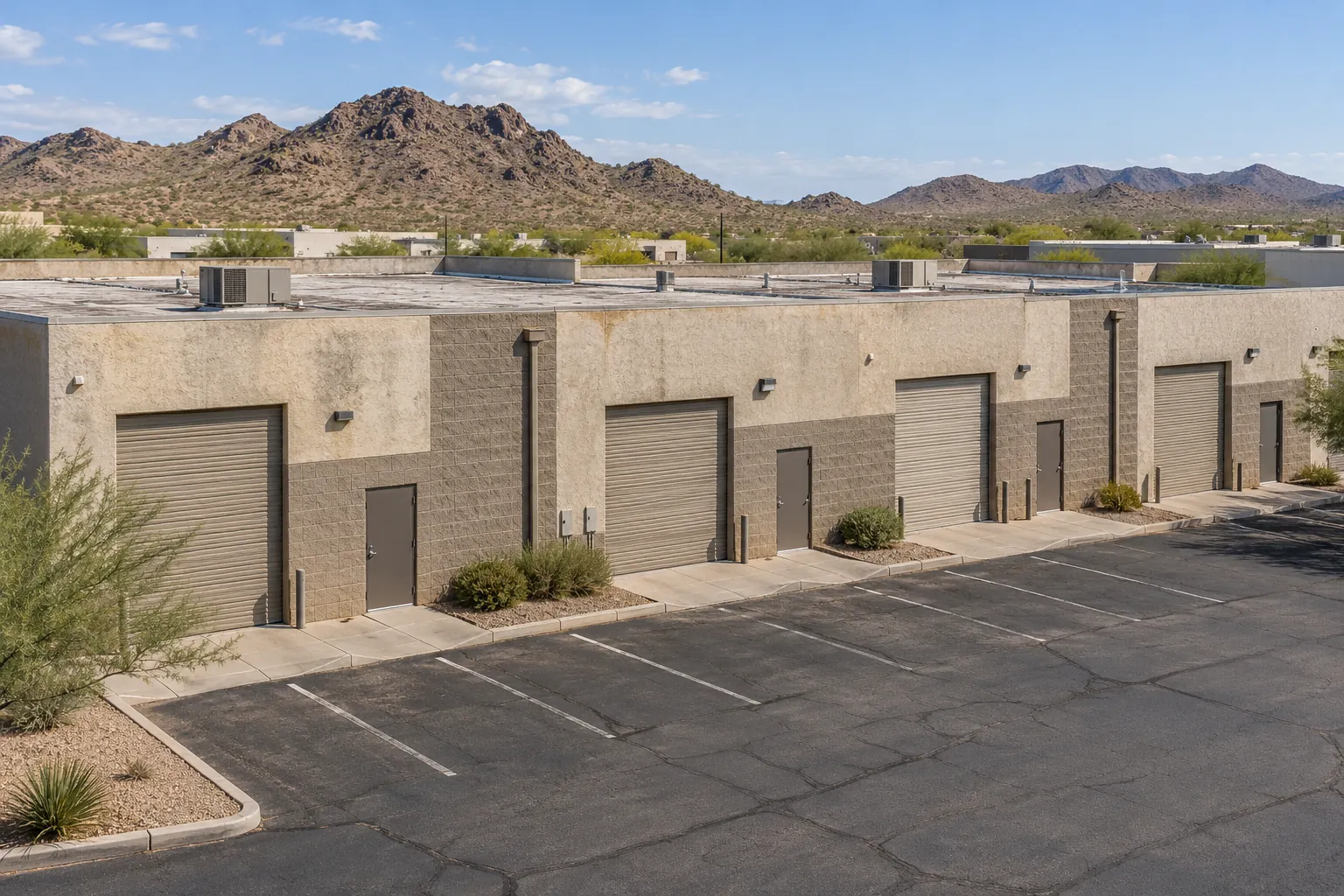
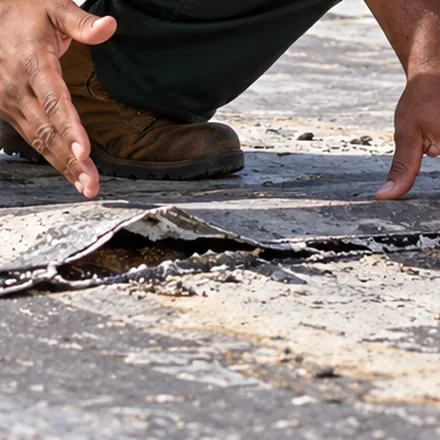
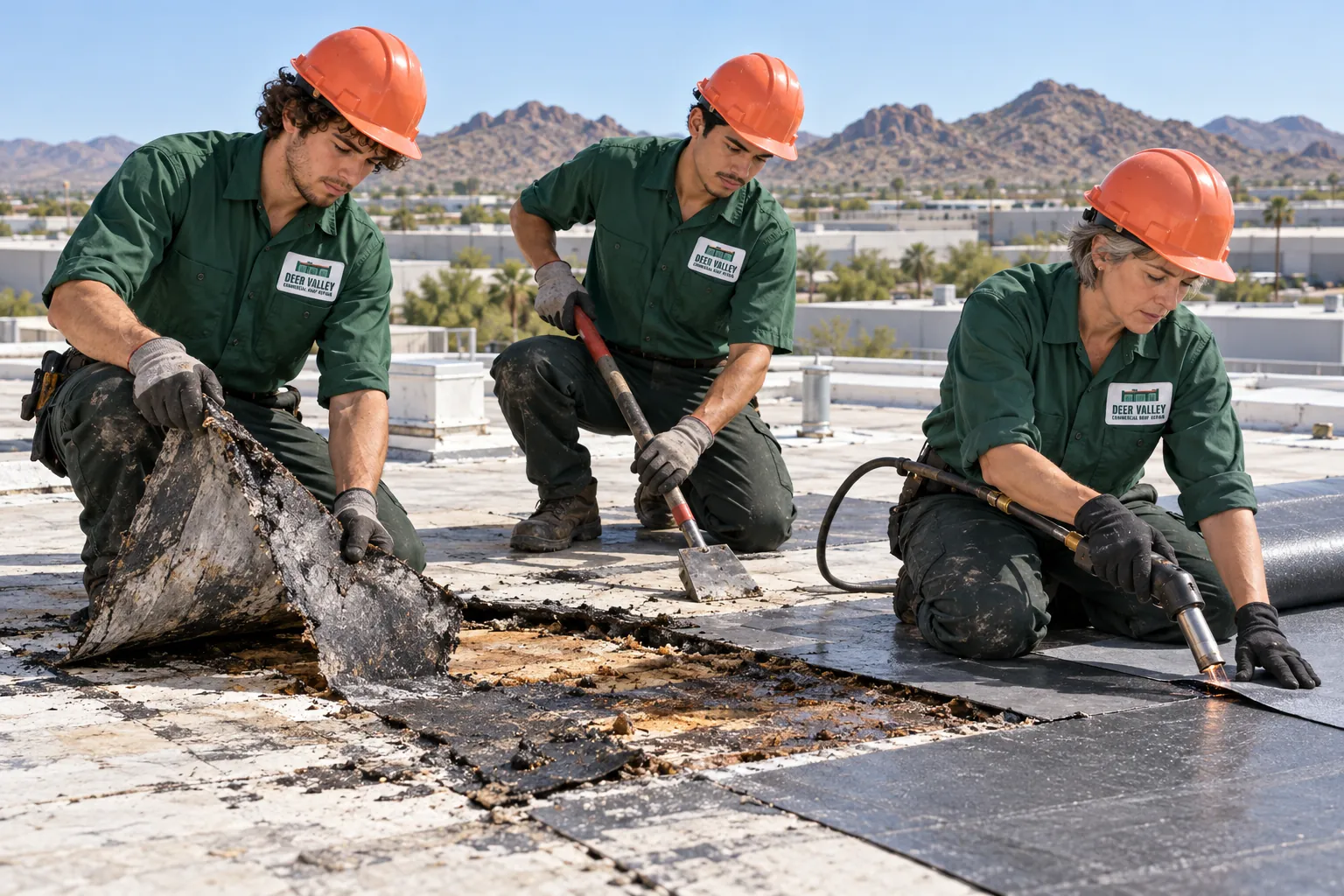
North Mountain grew as an established village with a mix of small and large businesses, and many of its retail and office roofs have been patched more than once. Each patch adds a layer, and new material only holds if it bonds to something firm.
Before any repair, we cut a core to count the layers, check which old patches have lifted, and decide what has to come off.
Old patches cover the details where leaks started. These are the five zones where layered repairs cause trouble.
Base flashing patched over several times thickens at the wall until the top edge pulls away. Water then runs behind every layer at once.
Patches stacked on one lap leave ridges that hold water. The bottom patch often lets go first, and the ones above it hide the gap.
Roof cement smeared around a drain bowl over the years blocks the clamping ring. Removing it is the only way to reseat the ring and stop the leak.
Pipe boots and pitch pans topped up with sealant again and again crack in rings. Rebuilding the flashing around a clean penetration replaces those layers.
Leaks that went on under old patches can leave wet board below them. A meter reading through the layers tells whether the insulation is still dry.
Taking old patches off before repairing pays off for the retail and office buildings that make up much of North Mountain.
New seams and flashing bond to firm membrane, so the repair holds through summer heat instead of peeling like the patch under it.
Counting the layers shows how much life the roof has left, which helps owners plan budgets for the next few years.
Removing failed patches exposes the real entry point. Fixing it there ends the cycle of patching the same stain every season.
Patch removal and repair happen on the roof in small areas, so shops and offices below keep their regular hours.
Two services cover most of the repair work on older North Mountain buildings.
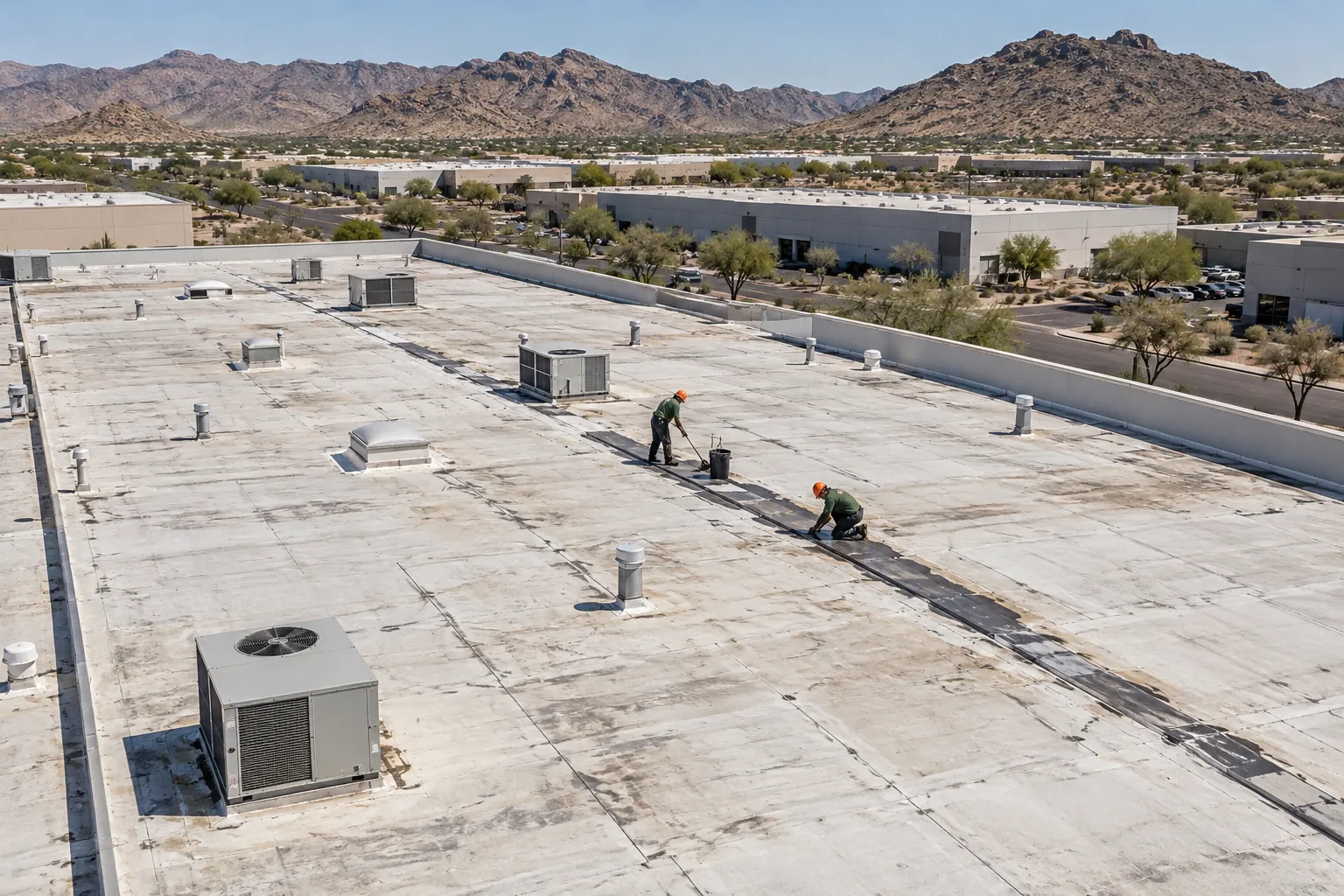
Built-up and single-ply roofs with layered patches get cleaned back to firm membrane and repaired with matching material.
Repair a flat roof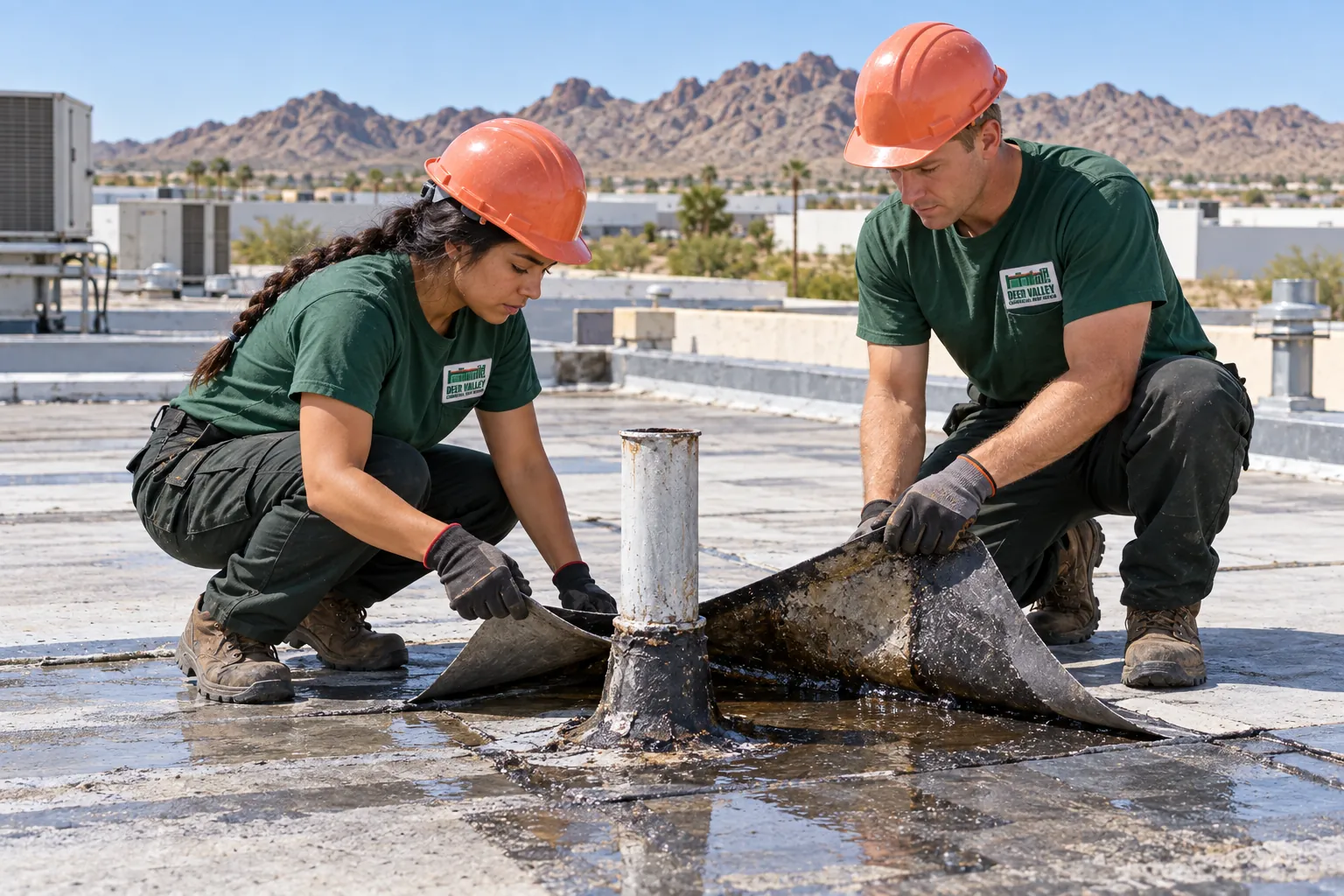
When patches hide the entry point, tracing finds where water actually gets in before any new material goes down.
Trace a leakA patch that keeps leaking is usually covering the wrong spot. Call us and describe where the stain shows up.
Call UsPatched roofs need one extra step: deciding what comes off before anything goes on.
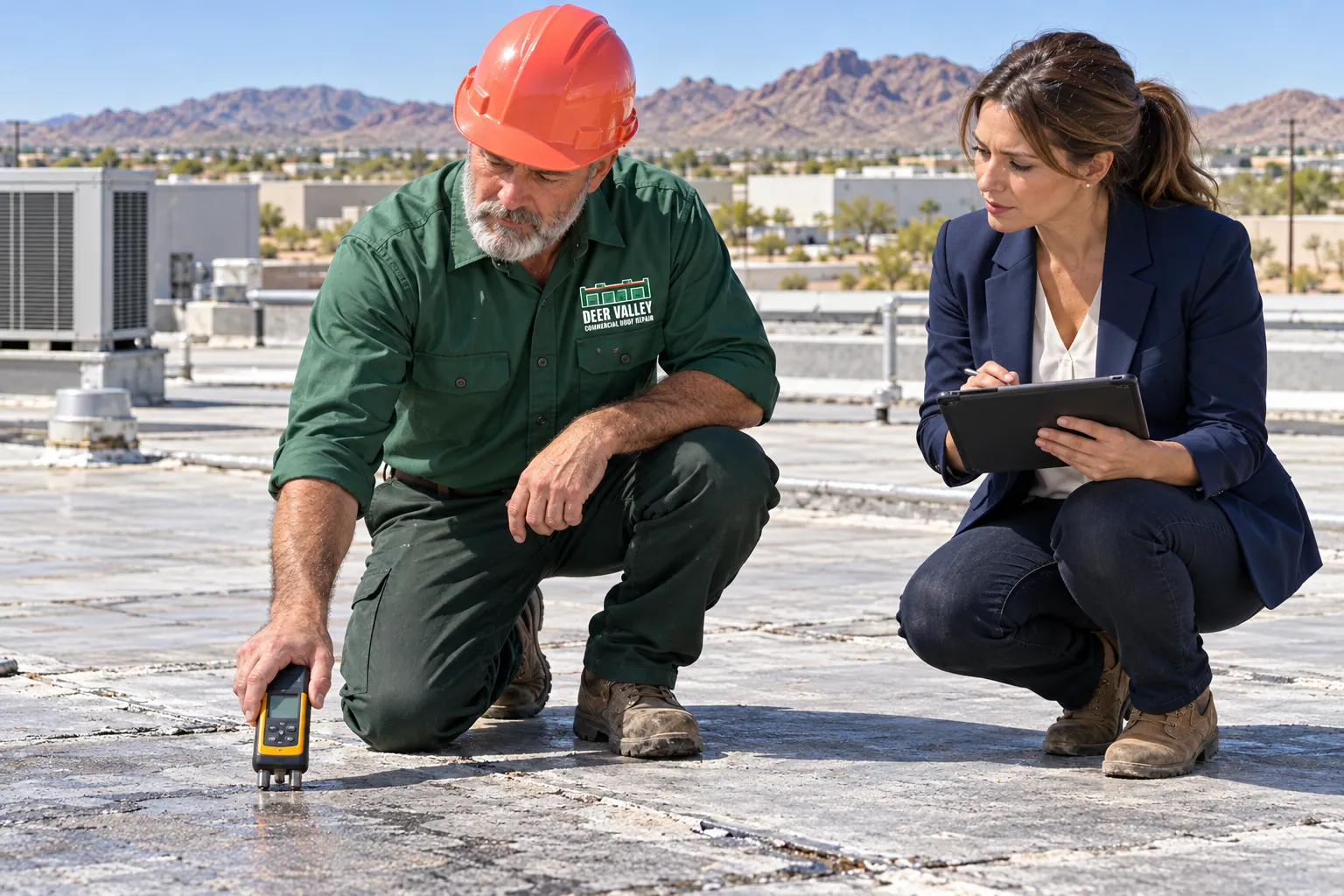
We map every old patch on the roof, press on each one to find lifted edges, and meter the insulation around them and around any stains inside.
A small core cut shows the membrane, patch layers, and insulation in section. That tells us how much has to come off for the repair to bond.
Brittle and lifted patches come off down to firm membrane. Old sealant gets cleaned from drains, pipes, and curbs so new flashing can seat.
Seams are re-adhered or welded, flashing is rebuilt at walls and penetrations, and any wet board found under the old patches is replaced.
Photos show each patch area as found and as repaired, so the next inspection knows which details are new and which still carry old layers.
We also repair roofs in these nearby parts of the service area.
Industrial and airport-area roofs just north of North Mountain.
Retail and office roofs that drain through interior drains.
Newer roofs repaired with warranty terms in view.
See every area we cover along I-17.
When wet insulation spreads across large sections, the deck shows rust or sags, or the membrane cracks beside every old patch. Repair still fits when the problems sit at a few seams, curbs, or drains and the board underneath is dry.
Only when the old patch is firmly stuck down and clean. Lifted or brittle patches come off first, because new material stuck to a loose layer fails along with it.
A core cut. A small round sample shows every layer from the membrane down to the deck, and the hole is patched before we leave.
Sealant built up over years hides cracks and keeps new flashing from seating. Cleaning it off shows the real condition of the drain ring or pipe and gives the new flashing a clean surface.
North Mountain is a City of Phoenix village, so City of Phoenix Planning and Development handles permits. Small seam and flashing repairs usually count as ordinary repair; tearing off a section goes through a permit.
Yes. Work stays on the roof, materials are staged away from entrances, and noisy steps like core cuts can be scheduled before or after store hours.
Dates and photos of past patches help us find which ones failed and avoid repeating a repair that already let go once.
Look at the core cut and the patch map together. A roof with dry insulation and a handful of lifted patches is a good repair candidate. A roof where most patches have failed and the board underneath is wet is heading toward replacement, and we tell you that plainly after the inspection.
Tell us how many times the roof has been patched and where it leaks now. We will set up a free inspection.
Leave a name and number, or call (623) 310-0171 now.