Edge And Parapet
Parapets on these buildings hold water in until the drains take it. Overflow scuppers through the wall need clear openings and sealed flashing for heavy storms. Scupper boxes also collect dust that blocks them.

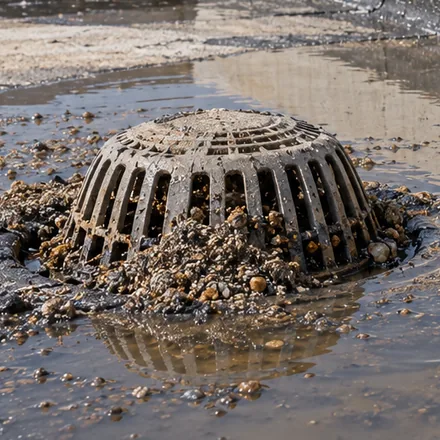
Desert View commercial roof repair often means interior roof drains. We fix the drain bowls, clamping rings, and flashing that leak above finished ceilings.
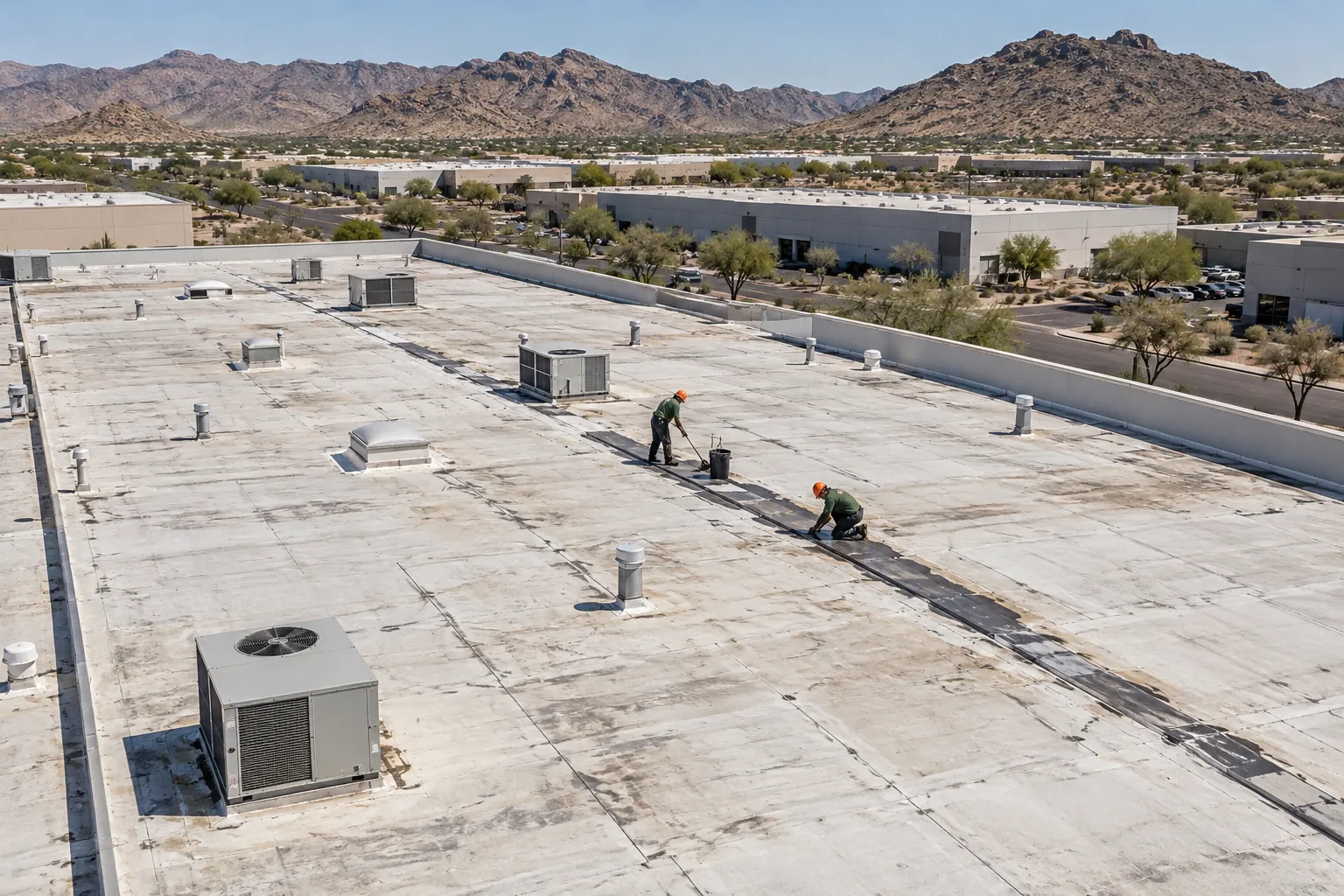
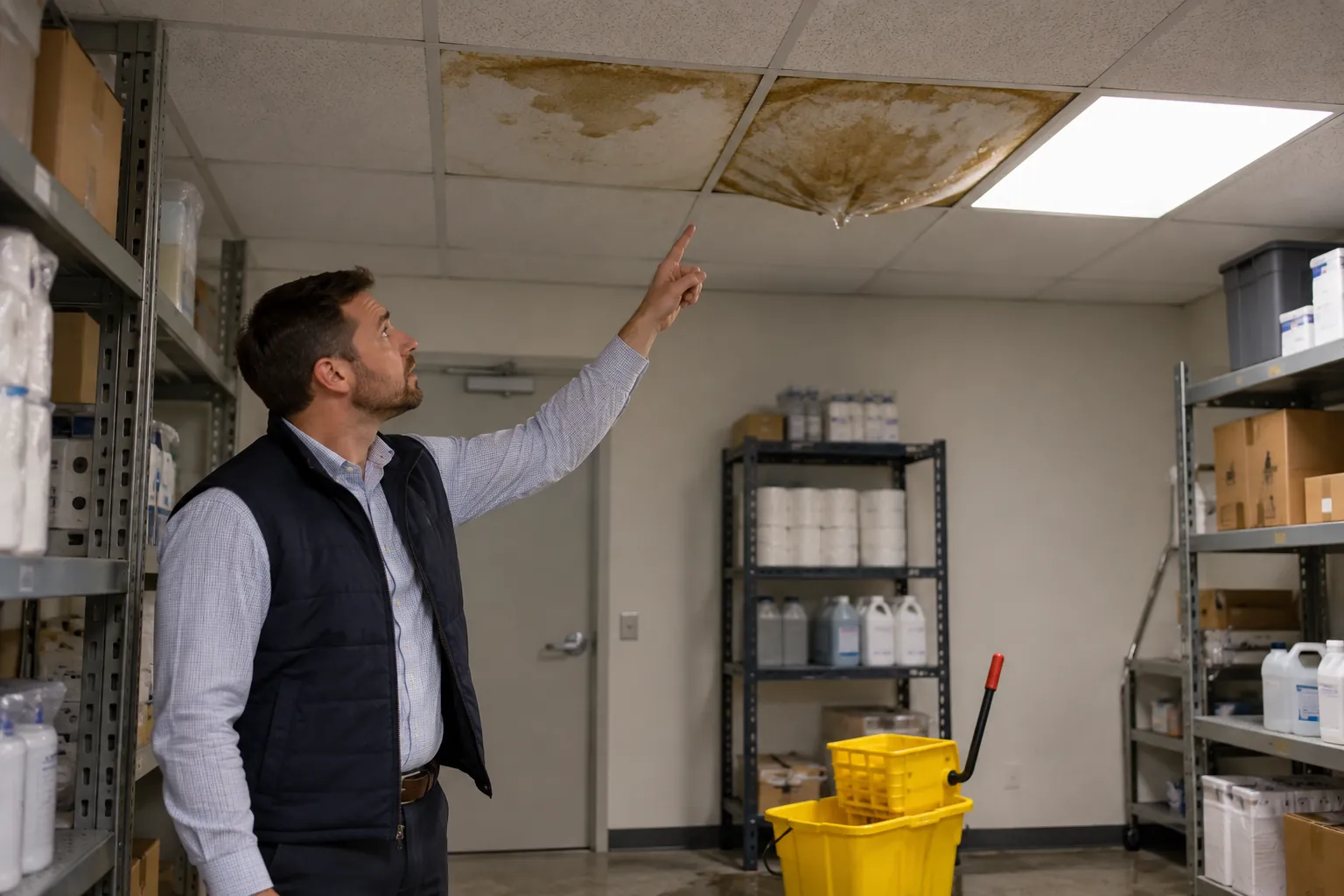
Desert View's urban core sits near Loop 101 in and around Desert Ridge, with high-end retail and office space. Many of these buildings drain the roof through interior drains, with leader pipes running above finished ceilings.
When a drain leaks, the water lands on ceiling tiles, lights, and carpet. Repairs focus on the drain bowl, its clamping ring, and the flashing around it.
Roofs that drain inward fail at a few predictable spots. Each zone below is checked on a Desert View visit.
Parapets on these buildings hold water in until the drains take it. Overflow scuppers through the wall need clear openings and sealed flashing for heavy storms. Scupper boxes also collect dust that blocks them.
Laps near the drain sump spend the most time wet. Those seams open first and feed water toward the drain bowl. Probing them is part of every drain visit.
A loose or cracked clamping ring lets water slip between the membrane and the bowl. Bolts that rust or strip leave the ring unable to hold the sheet tight. New bolts go in evenly so the ring seats flat.
Rooftop units sit over leased space, and their curbs are the other common source. Condensate lines draining onto the roof add water near curb flashing. The condensate outlet gets moved away from the curb.
Tapered insulation around drains can soak up water from a ring leak. Wet board in the sump softens and lets the drain bowl sit low. Replacing it brings the bowl back level.
Fixing a drain at its ring protects the finished space under it, which matters most in retail and office buildings.
A reseated ring and rebuilt flashing send water down the leader pipe, instead of letting it seep into the ceiling around it.
Ceiling tiles, lights, and carpet in finished suites stop taking water, so leased space stays ready for tenants and customers.
A clear strainer and a level sump keep water from ponding over seams near the drain.
Roof-side drain work happens without entering the suite in most cases, and ceiling-side checks are scheduled with the tenant.
Drain leaks and the stains they cause fall under these two services.

Stains in finished suites are traced from the roof side, separating drain leaks from curb and seam leaks.
Trace a leak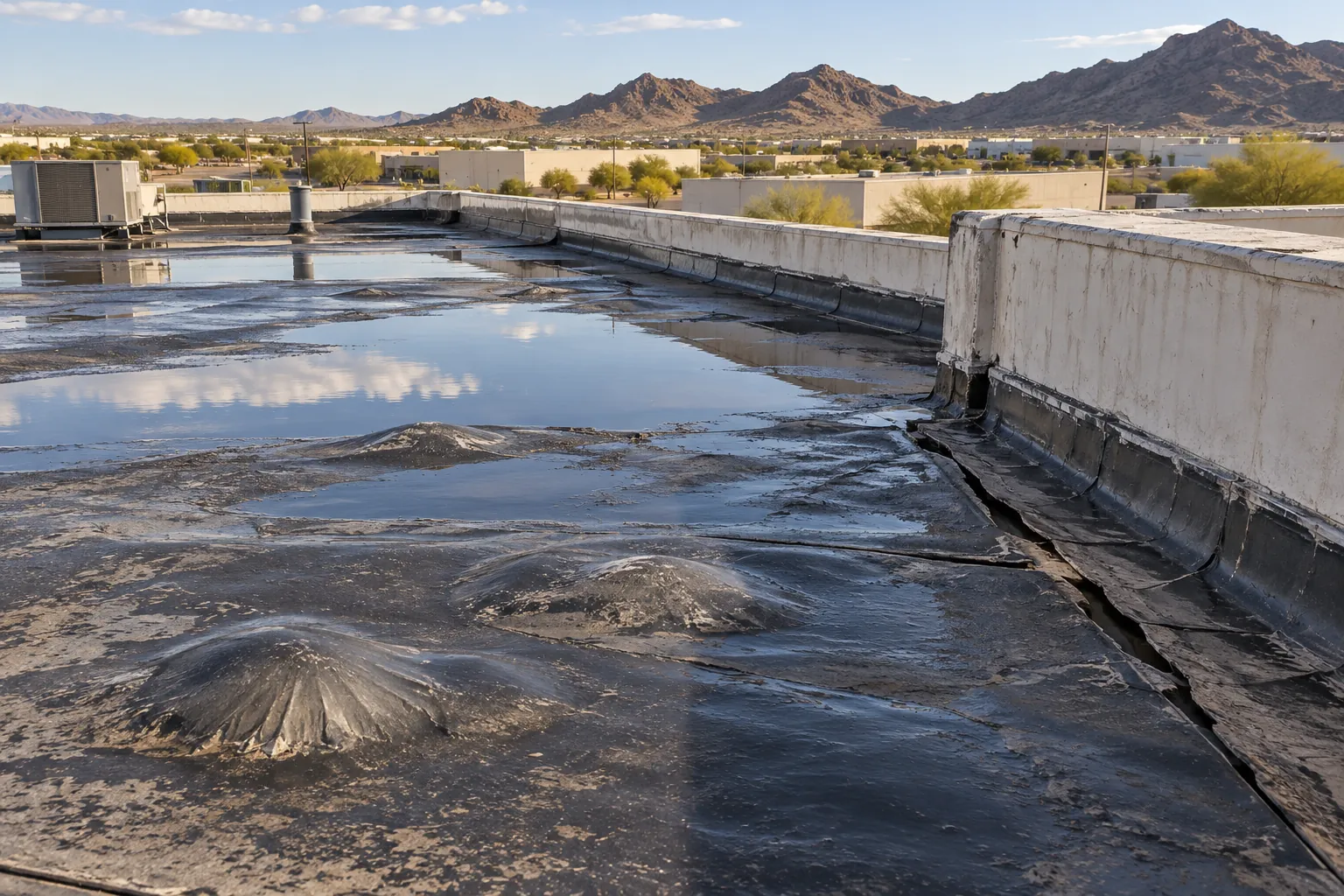
Drain flashing, sump seams, and ponding areas on flat retail and office roofs get repaired with matching sheet.
Repair a flat roofA ring of stained tiles around an interior drain often means the clamping ring has let go. Call us and describe where it shows up.
Call UsDrain repairs combine roof-side work with a check from the ceiling below.
We check each roof drain, its strainer and ring, the seams in the sump, overflow scuppers, and the curbs nearby, and meter the tapered insulation around each drain.
Where a tenant allows access above the ceiling, the leader pipe connection under the drain gets a look to separate a ring leak from a pipe joint leak.
The strainer and clamping ring come off, old sealant is cleaned from the bowl, and corroded bolts are drilled out and replaced.
New membrane flashing goes into the bowl, the ring is reseated with new bolts torqued evenly, and wet board in the sump is replaced so the drain sits level.
Water is run into the sump while someone watches the ceiling below. Photos record the ring, the flashing, and the cleared strainer.

Nearby parts of the service area include these.
West along Loop 101, with plant and airport-area roofs.
Older retail and office roofs carrying patch layers.
County parcels to the north.
See every area we cover along I-17.
Twice a year, in spring before the monsoon and in fall after it, plus after strong wind or hail. Each visit should pull silt from the drains and scupper boxes, press on old patches, and probe seams near units and pipe boots.
Stains centered under an interior drain, often in a ring around a ceiling tile, point to the drain. A flood test of the sump with someone watching below confirms it.
Those are overflow scuppers. They let water out if the main drains clog, so they need clear openings and sealed flashing where they pass through the wall.
It can add water near curb flashing that is already loose. Condensate lines should drain to a drain or pad, and the curb flashing next to them gets checked on each visit.
Most drain repairs happen entirely from the roof. A ceiling-side check helps tell a ring leak from a pipe leak, and that visit is set up with the tenant ahead of time.
Desert View is a City of Phoenix village, so City of Phoenix Planning and Development handles permits. Drain and flashing repairs usually count as ordinary repair work.
A missing or broken strainer lets debris into the leader pipe, where it clogs out of reach. Replacing the strainer is cheap compared to clearing a blocked pipe above a ceiling.
Yes, in most cases. Replacement rings and bolts fit common drain bowls, and the membrane flashing gets rebuilt under the new ring. If the bowl itself is cracked or corroded, the drain body needs replacing, which is a larger repair we would explain first.
Tell us which suite shows the stain and where the roof drains are. We will set up a free inspection.
Leave a name and number, or call (623) 310-0171 now.