Eave And Ridge
Ridge caps and eave trim lift when their fasteners loosen, and wind-driven rain gets under the closure strips. Missing foam closures also let dust and birds into the panel ribs.
We handle commercial metal roof repair on pre-engineered steel buildings around Deer Valley: loose screws, open laps, rust, and worn skylight panels.
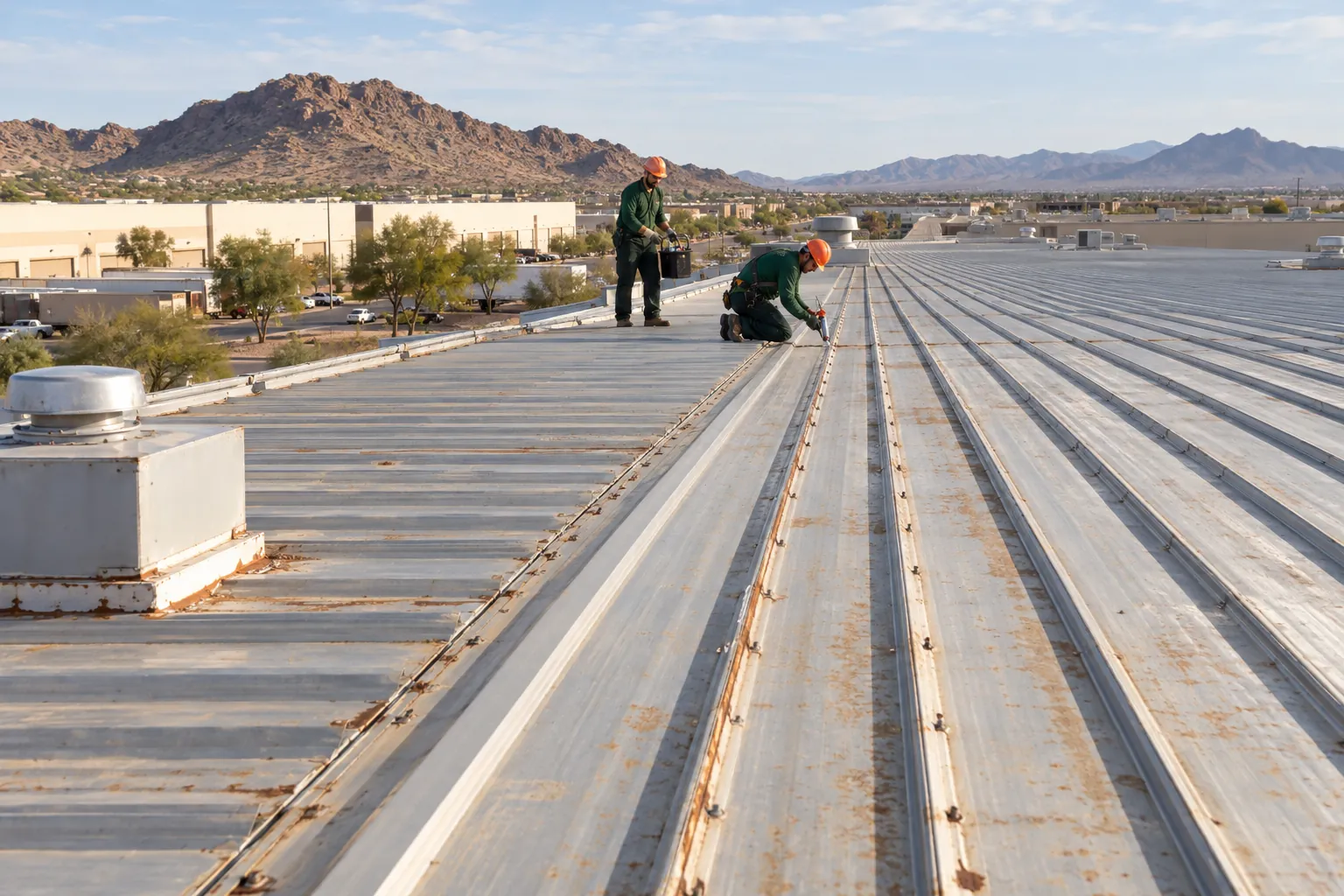
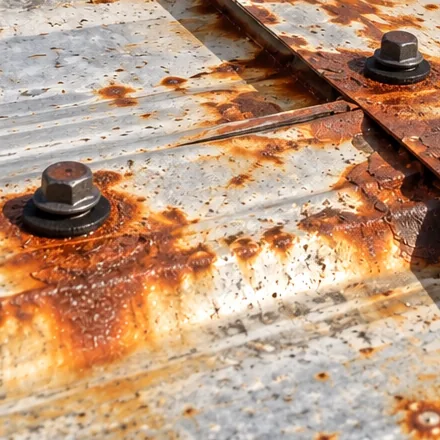
Most metal roofs in Deer Valley leak at their fasteners and laps long before the steel wears out. We check which one you have.
Pre-engineered steel buildings near Deer Valley Airport share the same weak points. These five zones get checked on every metal roof.
Ridge caps and eave trim lift when their fasteners loosen, and wind-driven rain gets under the closure strips. Missing foam closures also let dust and birds into the panel ribs.
Daily heat swings work screws loose and crack their rubber washers. A loose screw on a high rib still leaks, because water follows the panel and finds the open hole.
Butyl tape between panels dries, shrinks, and gaps, and end laps on long runs leak first. Rust often starts along the lap, where water lingers after rain.
Fiberglass skylight panels yellow, crack, and lose their seal at the rib. Curbs for exhaust fans and rooftop units need flashing matched to the panel profile around them.
Drips inside are sometimes condensation off the steel. Checking the insulation facing and the purlins under a wet spot tells condensation apart from a true leak before any panel work starts.
Four kinds of repair cover most metal roofs on shops, hangars, and warehouses here.
| Repair | What It Stops | When It Is Enough |
|---|---|---|
| Fastener replacement | Leaks at backed-out screws and cracked washers | The panel around the hole is firm, so an oversized screw seats tight |
| Lap reseal | Water entering between overlapping panels | Panel edges are straight and the steel under the old tape is firm |
| Rust treatment | Rust bloom spreading along laps and fastener rows | Rust is on the surface and wire-brushes down to bare metal |
| Panel or skylight swap | Holes, creases, and cracked fiberglass panels | Damage is limited to a few panels on the run |
Steel buildings near the airport carry shops, hangars, and storage. Each gets something different from a timely metal roof repair.
A drip from a loose screw above a hangar bay lands on whatever is parked below. Replacing the fastener row stops it without moving anything out.
Rust caught early wire-brushes off and gets primed. Left alone, it eats through the panel and turns a fastener job into a panel swap.
New skylight panels sealed at the rib bring light back into a shop and close the gaps that dripped onto benches and floors.
Fastener and lap work happens on the roof in sections, so the floor below keeps operating while each run is finished.
A row of drips usually means a row of loose screws or an open lap. Call us and describe where the water lands inside.
Call UsMetal roof repairs follow the panel runs, one section at a time.
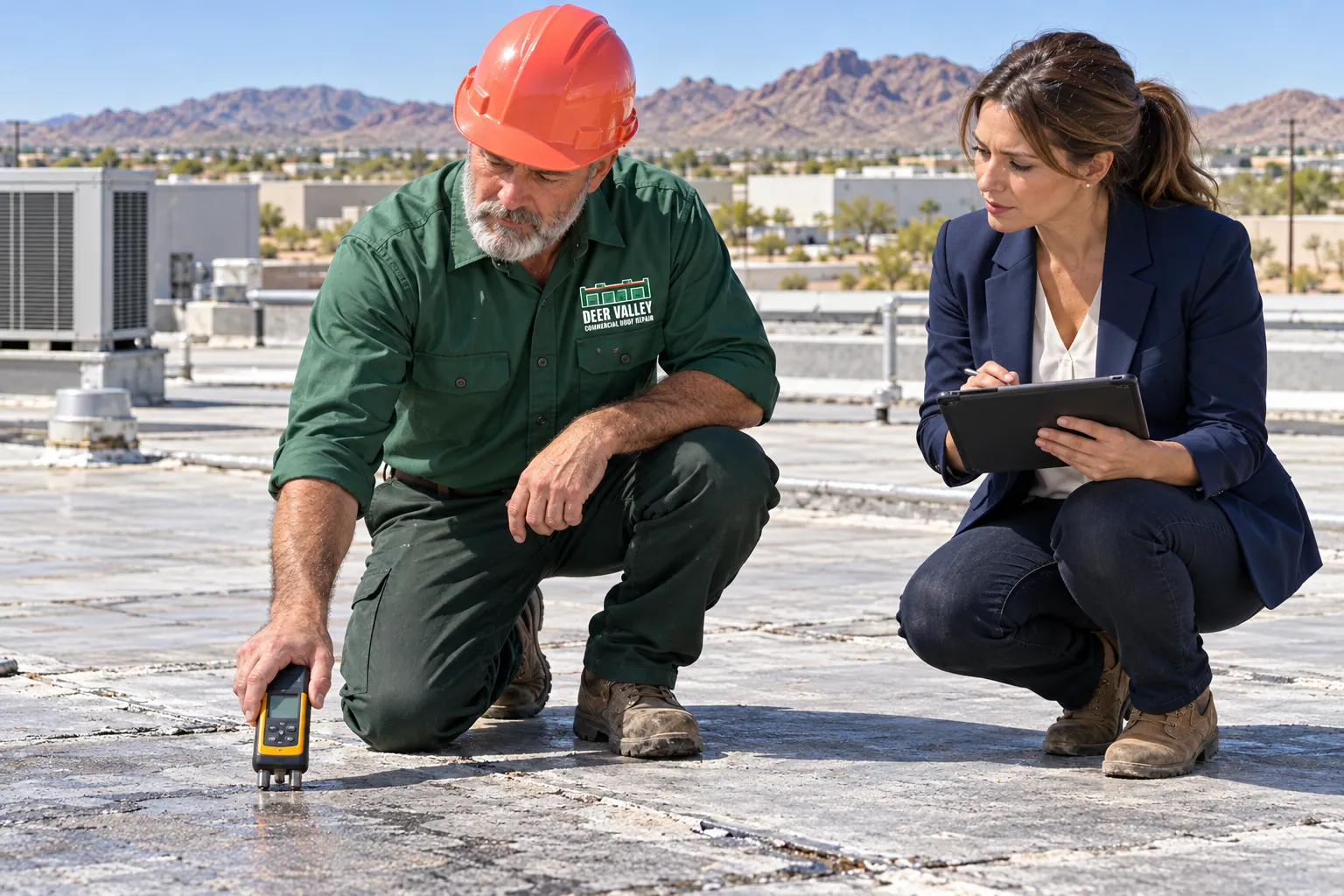
A roofer walks the runs on the purlin lines, checking every screw row, lap, skylight, and curb. Inside, the drip locations get matched to the panels above them.
Water on a metal roof follows the ribs downslope. We trace it uphill from each drip, and check the insulation facing to rule out condensation before any panel is touched.
Rusted laps and fastener rows get wire-brushed to bare metal and primed. Panels rusted through are marked for replacement instead of patching.
Backed-out screws come out and oversized screws with new washers go in. Laps get fresh butyl tape, and cracked skylight panels are swapped for ones that match the rib profile.
Repaired laps and skylights get a water test where practical. Photos of each run show which fasteners and laps were replaced, so the next inspection starts from a record.
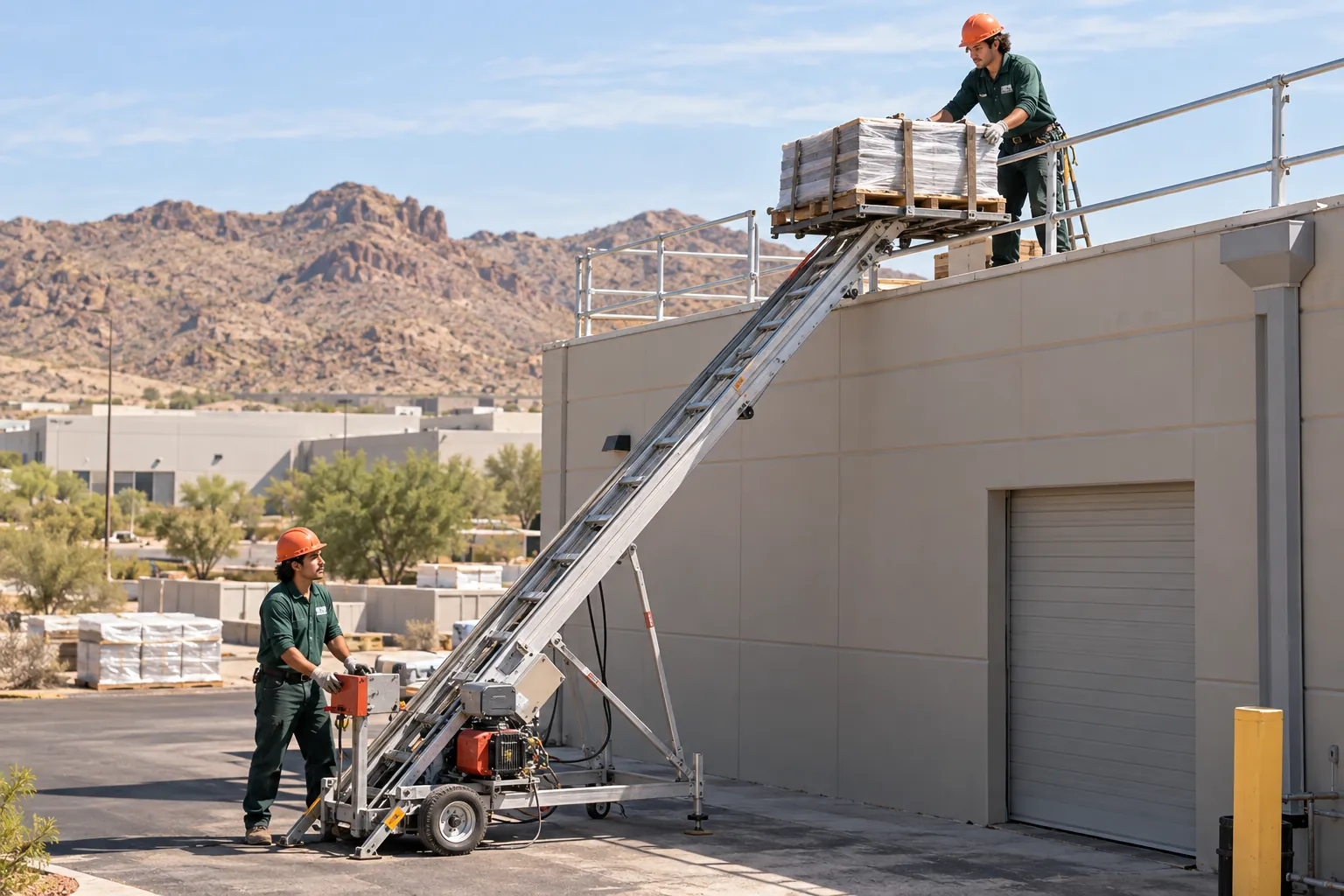
Metal roof work often overlaps with these two services.
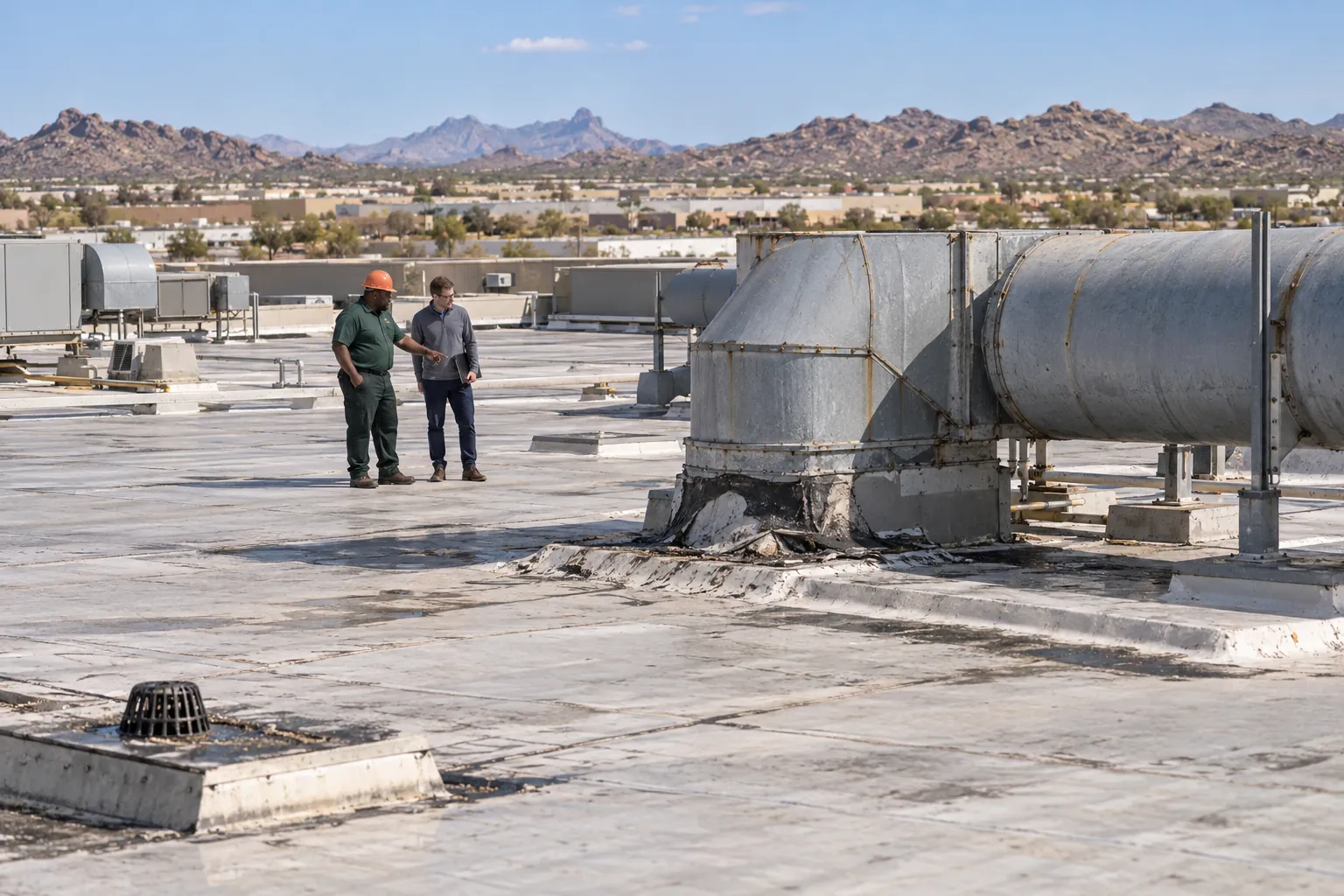
Steel plant roofs carry exhaust fans and ducts that vibrate their flashing loose. Industrial roof repair plans that work around running equipment.
Repair a plant roof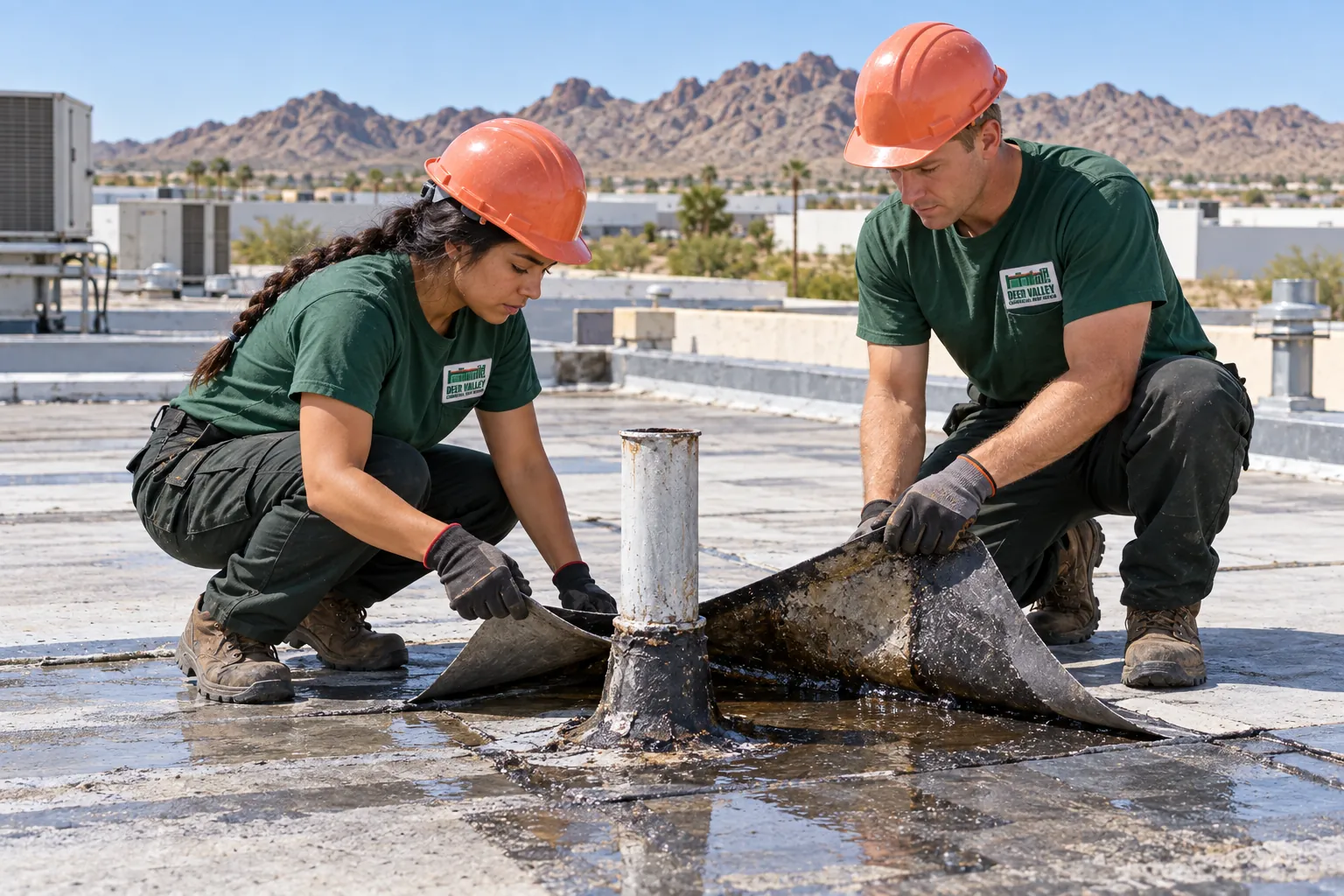
When a drip shows up far from any loose screw, leak repair traces the water back along the ribs to where it got in.
Trace a leakIt targets the parts that move and corrode. Daily heat swings loosen screws and dry out sealant on the steel buildings around the airport, so repairs replace backed-out fasteners with oversized screws and new washers, reseal dried laps, prime rust, and swap worn panels and skylights.
A screw that backed out has widened its hole. The next size up bites into fresh steel and seats the new washer tight against the panel, which closes the leak path the old screw left behind.
Surface rust can. Wire-brushing to bare metal and priming stops it from spreading along the lap. A panel with rust holes or soft edges gets replaced, since patching a hole in thin steel leaves a weak spot that keeps leaking.
Sometimes it is condensation forming on the underside of the steel. Torn insulation facing and drips on cool mornings point to condensation, while drips during rain point to a leak. We check both before replacing screws or panels.
Yes. Yellowed or cracked fiberglass panels come out and new panels matched to the rib profile go in, sealed at each lap. The surrounding steel panels stay in place.
In most cases, yes. Fastener and lap work happens from the roof, one run at a time. We agree on which bays sit under each day's section, and protect anything below the run where screws are being replaced.
Tell us which building, which bays drip, and when the water shows up. We will set up a free inspection of the panel runs.
Leave a name and number, or call (623) 310-0171 now.