Edge And Parapet
Long parapets on big plant roofs collect blown debris at the base. Base flashing splits there, and coping joints open after years of heat on wide, unshaded walls.

Industrial roof repair in Deer Valley around ducts, exhaust stacks, and rooftop units, with lockouts and work windows set with your facility team first.
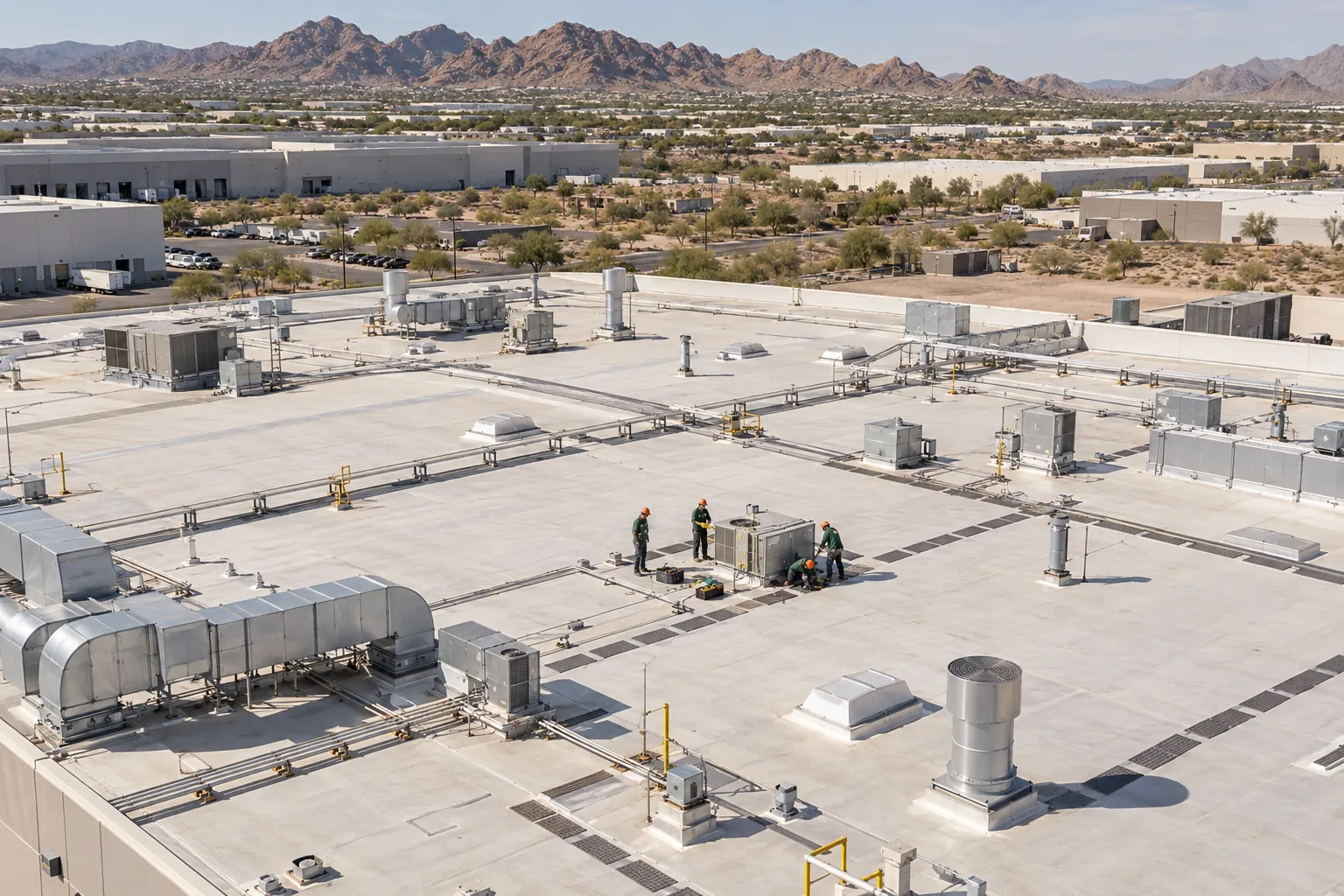
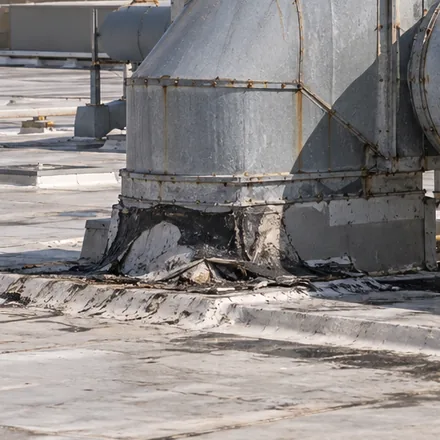
Industrial roofs fail around their equipment first. Whether a repair holds depends on what the exhaust and vibration have done to the membrane.
Equipment changes how a roof ages. These are the five zones we check first on Deer Valley plant and distribution roofs.
Long parapets on big plant roofs collect blown debris at the base. Base flashing splits there, and coping joints open after years of heat on wide, unshaded walls.
Foot traffic between units wears the membrane where walkway pads are missing or worn. Dragged tools and dropped parts puncture the field along those routes.
Process residue, dust, and debris from equipment work their way into strainers. A slow drain near an exhaust outlet holds residue against the membrane.
Exhaust stacks can leave residue that softens some membranes. Vibrating equipment curbs and duct supports loosen their flashing, and pipe supports wear into the sheet.
Heat and moisture from processes below can wet the insulation from inside. Core cuts near outlets show whether the board is wet and how far it reaches.
Four kinds of repair cover most plant and distribution roofs, each planned around the equipment on it.
| Repair | What It Stops | When It Is Enough |
|---|---|---|
| Curb and duct reflash | Leaks at vibrating units, ducts, and supports | The curb is solid and the unit can stay in place |
| Residue area repair | Softened membrane near exhaust outlets | The damage stays within a few feet of the outlet |
| Walk-route repair | Punctures and worn spots along equipment routes | New walkway pads go down along that walk path afterward |
| Drain cleanout and reset | Residue and debris backing water up | The drain bowl and clamping ring are intact |
Plants, distribution buildings, and shops each have their own stake in keeping the roof over production dry.
Repairs run in sections agreed with your facility team, so lines stay running under the roof areas not being worked on that shift.
Lockouts on rooftop units and a list of fans that stay running are settled before anyone opens the roof near them.
Fixing the flashing at a duct or curb keeps water out of the machinery and electrical gear that often sit right under it.
New walkway pads along equipment routes protect the membrane from the foot traffic that wore it out in the first place.
Call us with the building, the area affected, and what equipment sits under it. We will talk through what can be done safely first.
Call UsIndustrial repairs add planning steps around equipment and shifts.
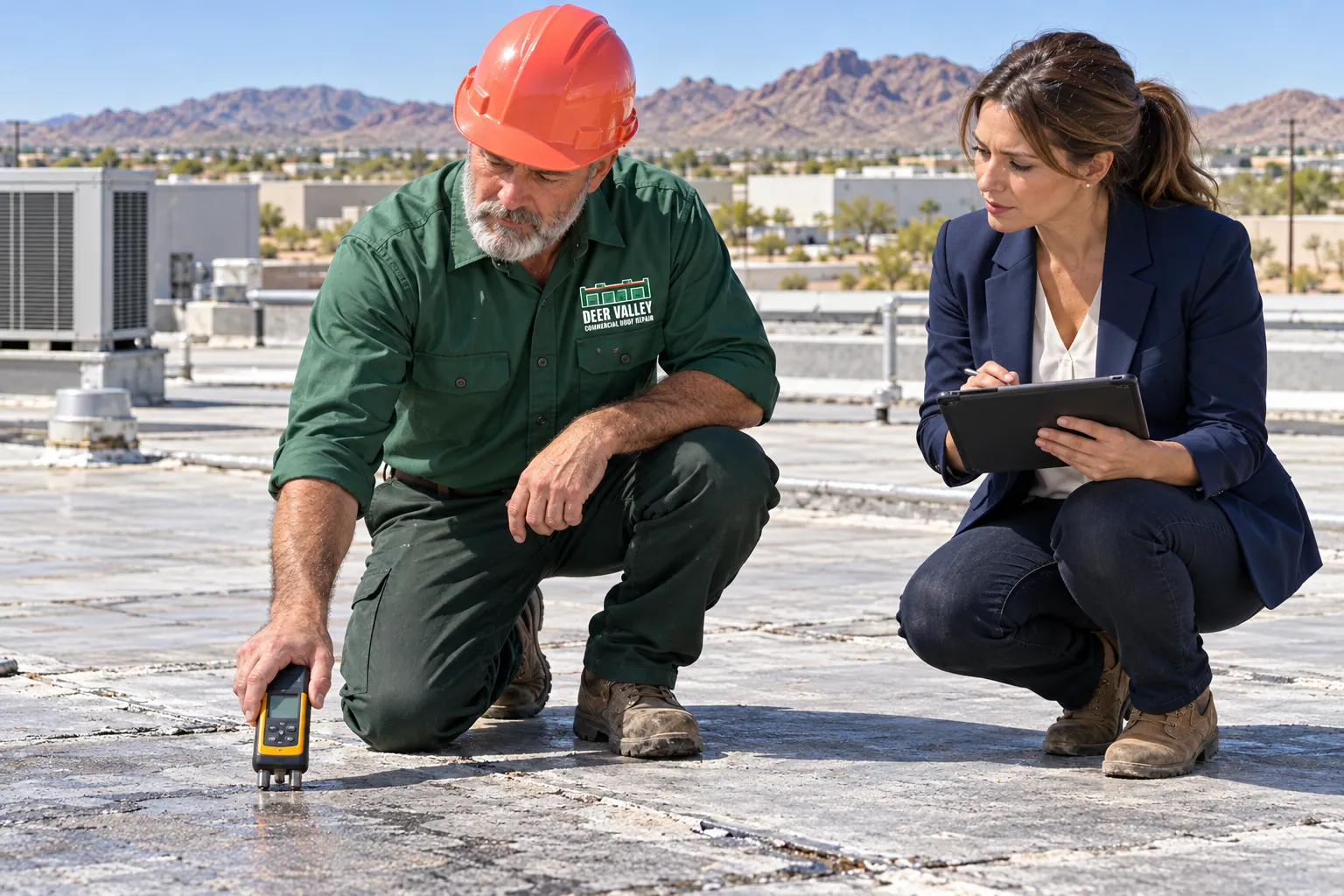
A roofer walks the roof with your maintenance lead, mapping units, stacks, ducts, and walk routes. Core cuts and meter readings near outlets show where the membrane and insulation have suffered.
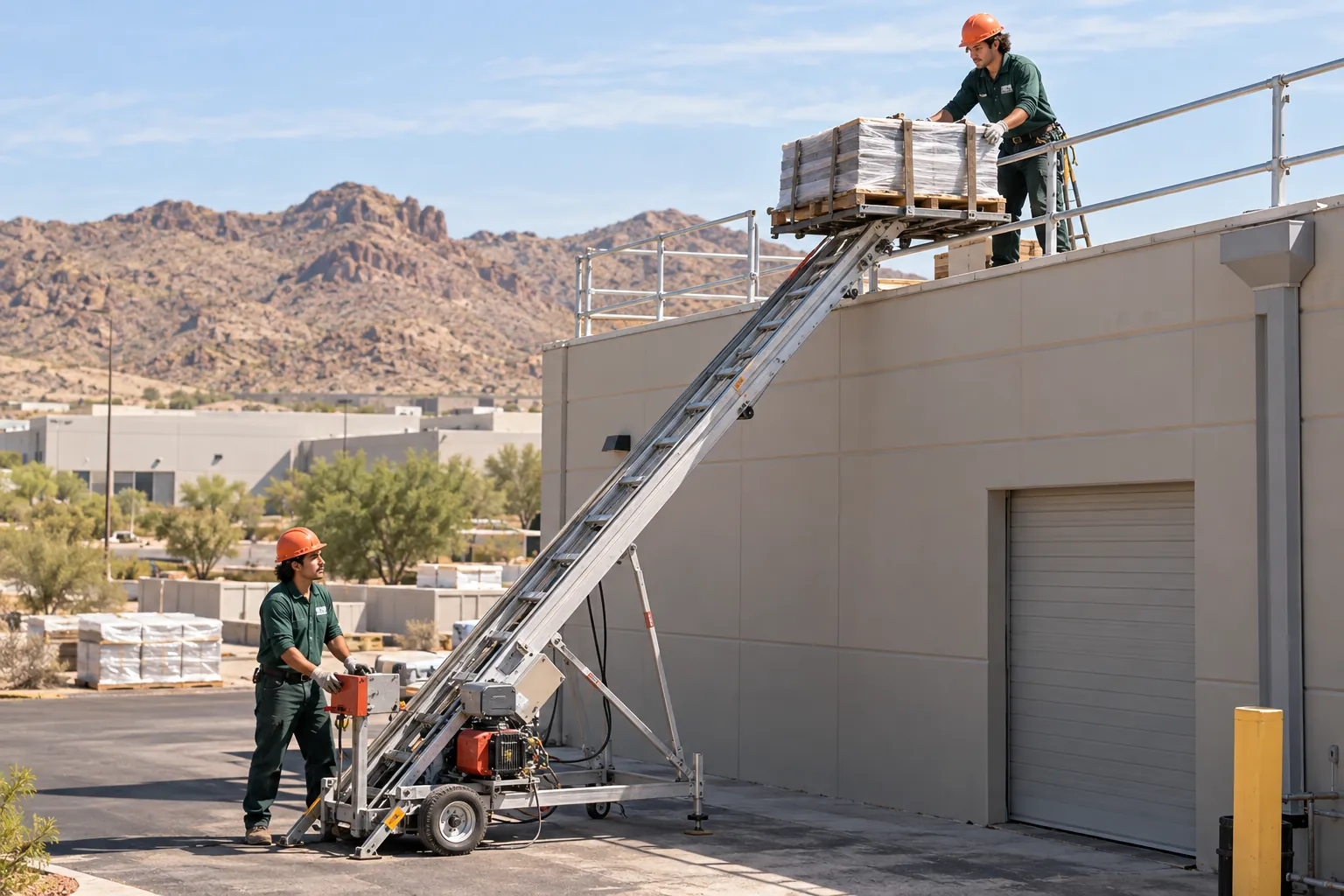
Before work begins, we agree on rooftop unit lockouts, which exhaust fans must keep running, and which sections can be open during each shift. In summer, crews work early-morning windows.
Air intakes near the work get covered, and catch pans go under any section where the deck is opened. Materials are staged away from equipment access paths.
Curb and duct flashing is rebuilt, residue-softened membrane is cut out and replaced, and pipe supports get pads so they stop wearing into the sheet.
Each section is cleaned, photographed, and handed back to your facility team before lockouts come off. New walkway pads go down along the routes that wore through.
Plant roofs often need one of these alongside the equipment work.
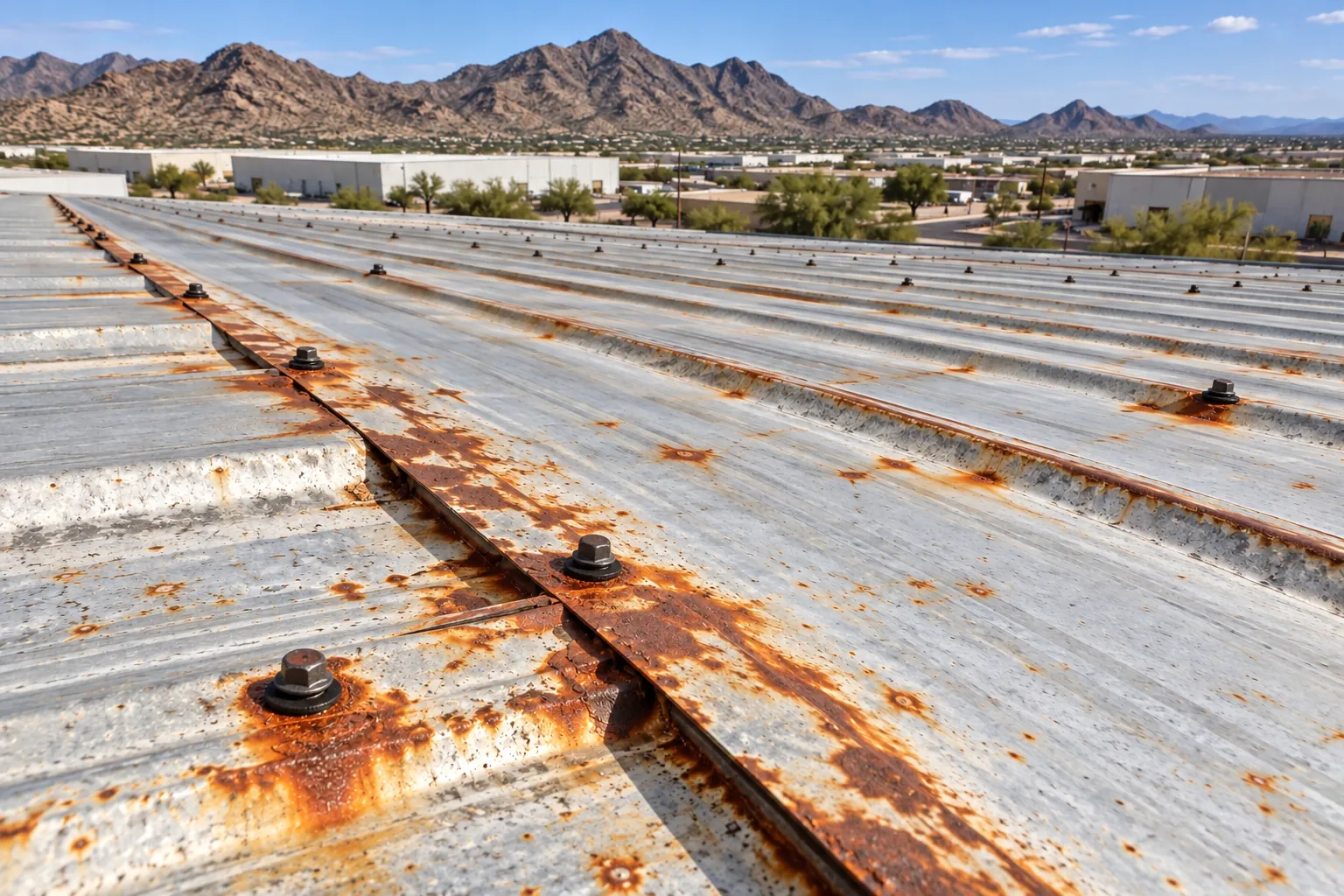
Many shops and plants near the airport sit under steel roofs. Metal roof repair handles the screws, laps, and rust on those panels.
Repair a metal roof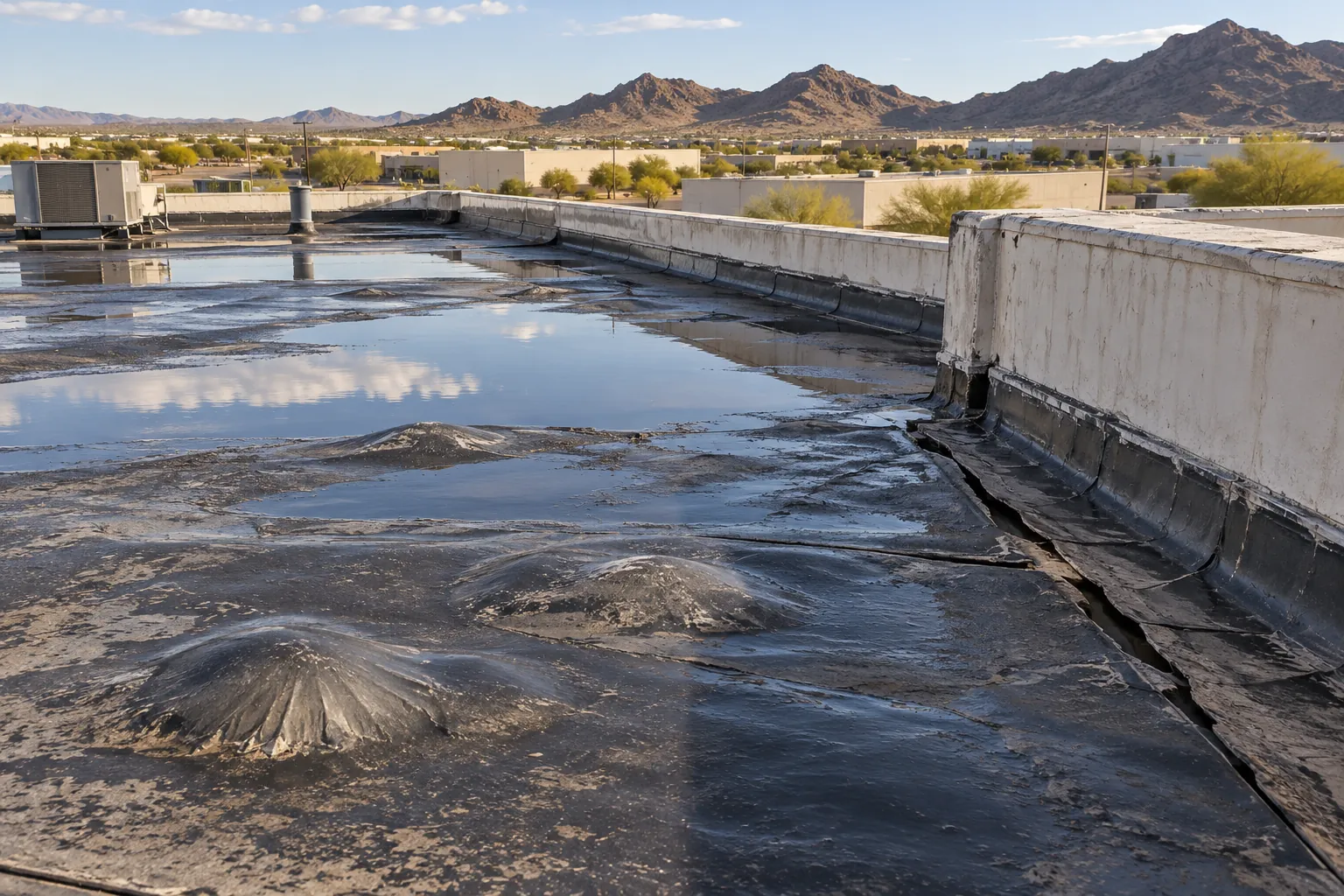
Large distribution buildings carry flat membrane roofs. Flat roof repair covers the seams, drains, and parapets away from the equipment.
Repair a flat roofIt starts with a plan built around the plant's schedule and rooftop hazards. Exhaust residue can soften some membranes, and vibrating curbs loosen flashing. We agree on lockouts, which fans keep running, and which sections can be open each shift before work starts.
Rarely. Work runs in sections, and each section is planned with your facility team so the areas below keep operating. Equipment that must be locked out for safety is scheduled for a time you choose.
Grease, oils, and process residue from some exhaust outlets soften certain membranes over time. The softened area swells and loses strength, so it gets cut out and replaced, and the outlet area is checked again on later visits.
Air intakes near the work get covered or shut down with your team's approval, and low-odor materials are chosen where the work sits close to intakes.
Foot traffic between units is one of the main causes of punctures on plant roofs. Pads along the routes your maintenance staff walk protect the membrane where it wore out before.
Early mornings, in most cases. Cooler hours are safer on a large exposed roof and give adhesives time to set. Sections are sized so each one is finished and closed before the afternoon heat.
Tell us what equipment is on the roof and where the leaks are. We will set up a free inspection with your maintenance lead.
Leave a name and number, or call (623) 310-0171 now.