Edge And Parapet
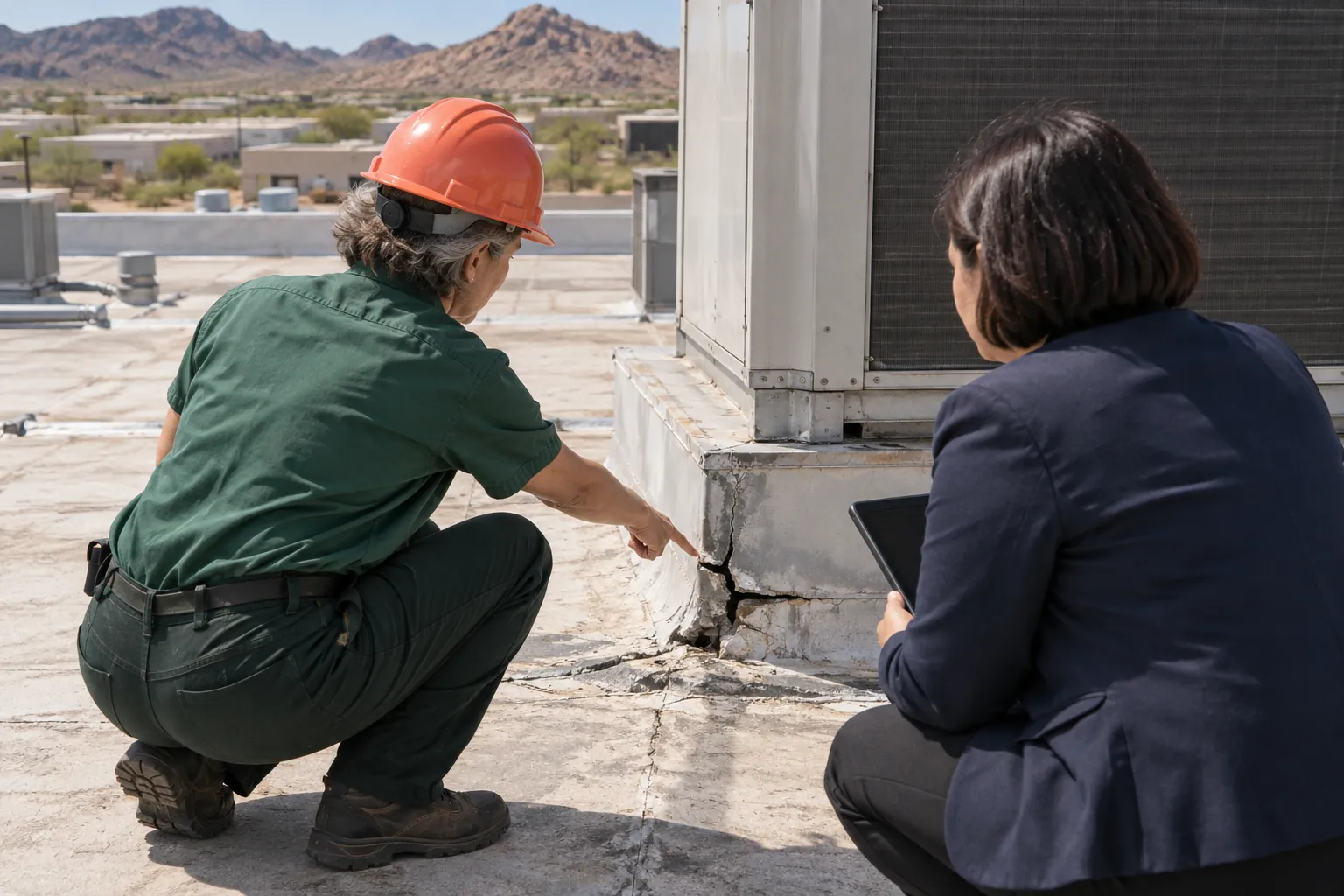
Water entering at cracked coping runs down inside the wall and shows up as a stain along an exterior wall, sometimes a full bay away from the joint that opened.

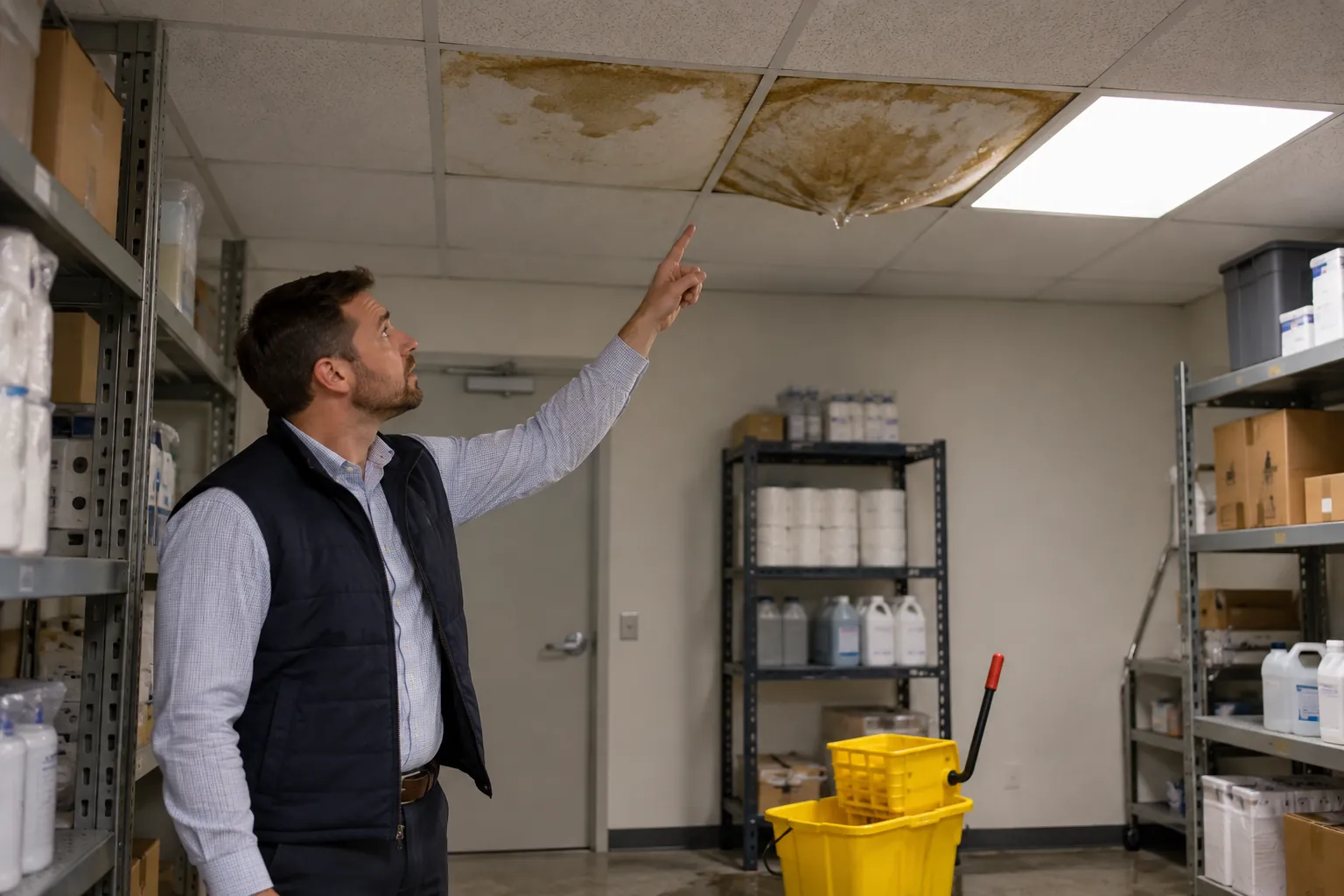
Commercial roof leak repair in Deer Valley starts at the stain inside. We trace it back to the seam, curb, drain, or pipe boot that let water in, then fix that detail.
One leak at one detail is a repair. Water that has spread through the roof is a bigger conversation.
Leaks on Deer Valley buildings almost always start at one of five zones. The stain inside rarely sits under the spot that failed.
Water entering at cracked coping runs down inside the wall and shows up as a stain along an exterior wall, sometimes a full bay away from the joint that opened.
An opened lap feeds water onto the top of the insulation. It travels downslope across the board joints until it finds a gap and drips through the deck.
A packed drain backs water up over seams and flashing. Leaks that appear only after heavy rain and then stop point to a drain or scupper problem.
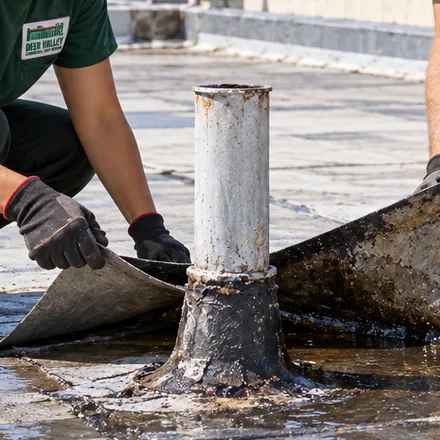
Cracked pipe boots, dried pitch pans, and loose curb flashing leak around equipment. These stains often sit near interior walls or mechanical rooms below the unit.
Deck flutes and purlins act like gutters inside the roof. They carry water sideways, which explains a stain several bays from the entry point.
Leak repair has two parts: stopping the water now and fixing the detail for good. Here is what each step involves.
| Work | What It Stops | When It Is Enough |
|---|---|---|
| Temporary stop | Water coming in now, at tape, patch, or a cleared drain | Until the roof is dry enough for the permanent repair |
| Leak tracing | Guesswork, by finding the actual entry point | Once a water test or meter reading confirms the source |
| Detail rebuild | The failed seam, boot, curb, or drain at its source | The insulation around it stayed dry or was replaced |
| Recheck after rain | A second hidden entry point along the same path | The ceiling stays dry through the next rain |
A leak traced and fixed at its source protects what sits under the roof, and that differs by building.
Retail tenants can keep selling while the roof above is worked on. A repair at the source ends the buckets and ceiling tiles in the aisle.
Tracing the real entry point keeps water off the pallets that sit bays away from where the roof failed.
Office ceiling tiles and drywall get replaced once, after the roof is fixed, instead of every time the stain comes back.
Photos of the entry point, the wet material removed, and the finished repair help when an insurer asks what failed and when.
Call us with the building location and where the water is landing. A roofer can talk through short-term steps until the permanent repair.
Call UsFive steps take a leak from the ceiling stain to a dry building.
We start inside, marking each stain, then walk the roof above it. Curbs, laps, drains, and pipe boots within reach of the stain get checked first, with a meter on the insulation.
From the roof area above the stain, the trace moves uphill toward the drain line. Controlled water tests on one detail at a time confirm which one lets water in.
If rain is coming before the permanent repair, tape, roof cement, or a sealed patch goes over the entry point and plugged drains get cleared.
Once the roof is dry, stopgaps come off. Wet insulation is cut out, and the seam, boot, curb flashing, or drain is rebuilt with material that matches the roof.
After the next rain, the stain area inside gets checked again. A dry ceiling confirms the source; a new drip means a second entry point along the same path.

Once the leak is traced, the fix belongs to one of these roof types.
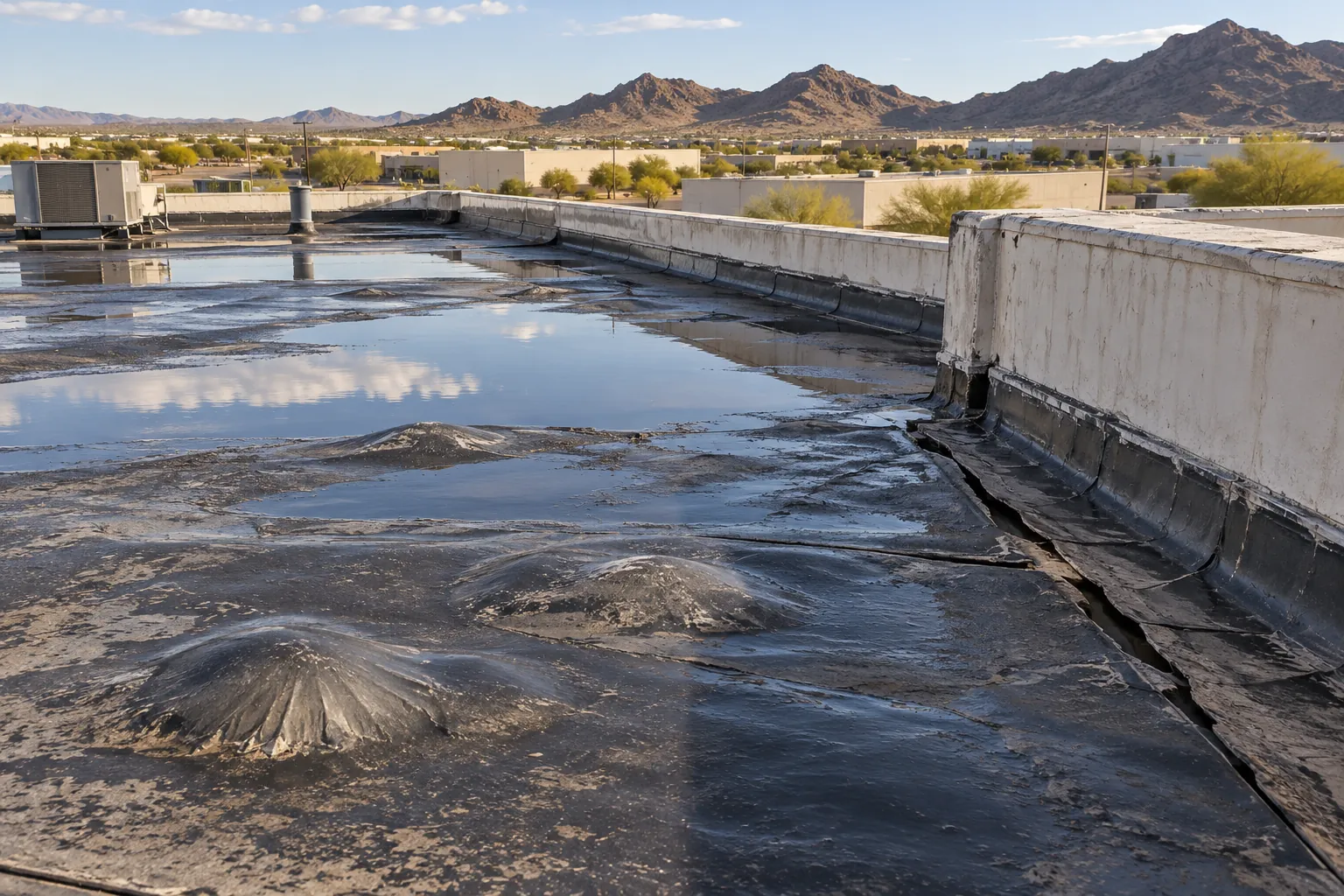
Most traced leaks end at a flat roof seam, drain, or curb. Flat roof repair rebuilds that detail with matching TPO or built-up material.
Repair a flat roof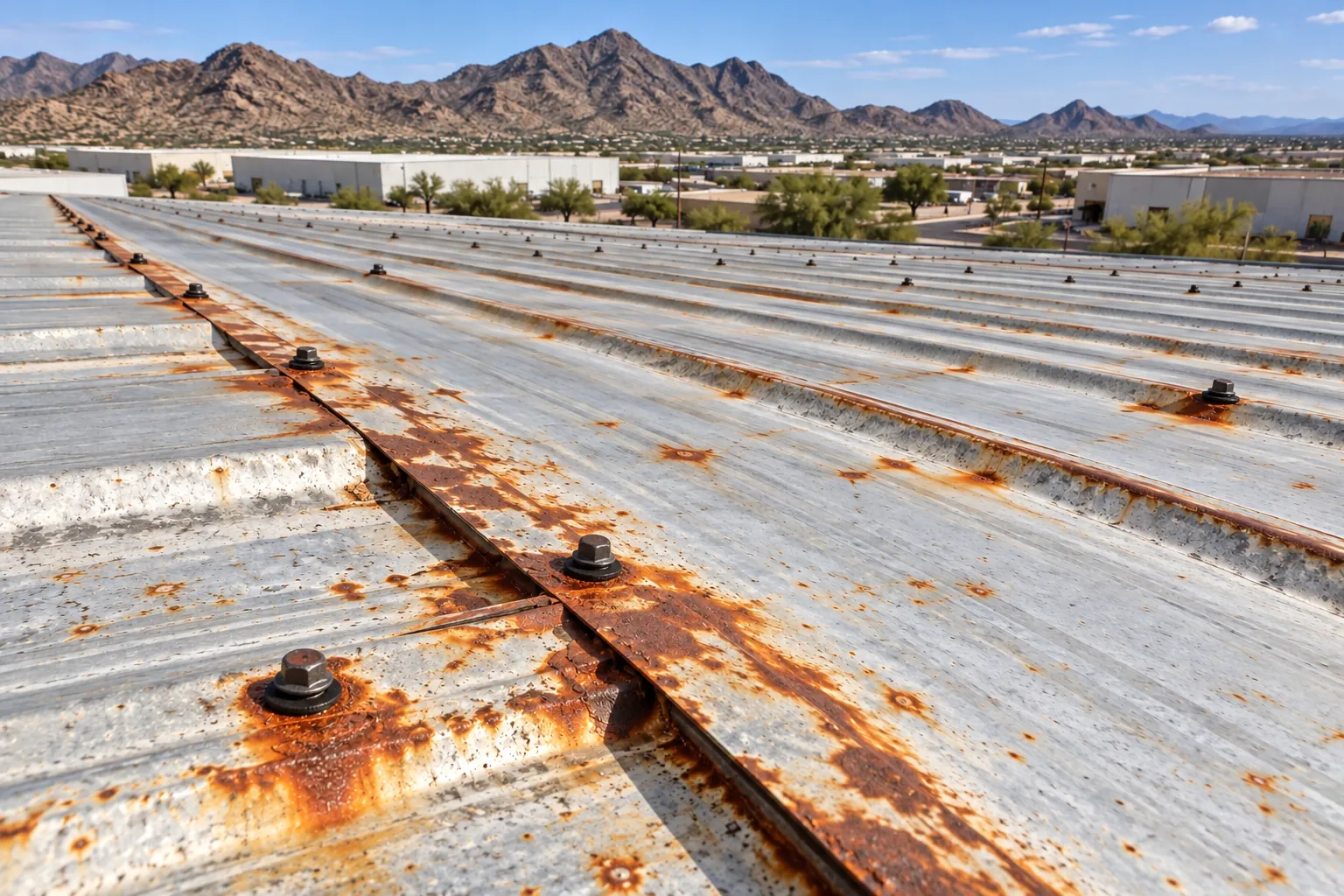
Drips under a steel roof usually trace back to a screw row or panel lap. Metal roof repair replaces the fasteners and reseals the lap.
Repair a metal roofWater travels before it shows. It gets in at a split seam or loose flashing, then runs along deck flutes, purlins, or the top of the insulation until it finds a joint. On a large warehouse that path crosses several bays, so we trace it from the roof side, uphill of the stain.
Yes. Tape or roof cement over a split seam, a sealed patch on cracked flashing, and a cleared drain all slow the water. Those stopgaps come off when the permanent repair goes in, once the roof is dry enough for new material to bond.
A roofer runs water over one detail at a time, such as a single curb or lap, while someone watches the ceiling below. When the drip starts, that detail is the source. Testing one spot at a time keeps the result clear.
It happens, especially after a monsoon storm. The recheck after the next rain catches a second entry point along the same path, and it gets the same trace-and-repair treatment as the first.
Board that is soaked through gets cut out, because a patch over wet insulation traps the water and fails. Damp edges of the area can dry once the leak stops. A meter or core cut shows which is which.
Wait until the roof repair is done and the next rain has passed. Replacing tiles first hides a returning leak, while a dry ceiling after the recheck shows the repair worked.
Tell us where the stain is, when it shows up, and what sits under it. We will set up a free inspection of the roof above.
Leave a name and number, or call (623) 310-0171 now.